Top-Rated Stud, Pipe, and Cable Detectors for Professional and DIY Projects
Choosing the right detector depends on whether you are scanning interior drywall for mounting fixtures or locating underground lines for excavation. Modern wall scanners integrate multi-sensor technology to identify wood studs, metal framing, plastic or metal piping, and energized AC wiring. For interior renovations, handheld digital scanners provide visual feedback to avoid drilling into hazards. Conversely, specialized underground locators are engineered for tracking buried utility lines outside. Selecting the correct tool requires balancing the depth of scan, the material types identified, and the specific display features necessary for your project. This guide outlines the capabilities of various detectors to help you match the right equipment to your specific detection requirements and site conditions.
When selecting a detection tool, consider the environment where you will be working. Devices designed for drywall rely on sensors that detect density changes and electromagnetic fields, making them ideal for finding studs and live wires behind walls. These units often feature LCD displays and audio alarms to assist in pinpointing the center or edges of hidden elements. If your work involves plumbing or electrical infrastructure, ensure the model specifies the ability to distinguish between live and non-live wires or different pipe materials. By reviewing the specific detection modes—such as 5-in-1 or 6-in-1 configurations—you can prioritize the features most relevant to your repair or installation tasks.

1. Walabot DIY 2 – Visual Stud Finder & Wall Scanner for Drywall. Detects Wood & Metal Studs, Plastic & Metal Pipes, Live & Non-Live Wires | Detects wood, metal, pipes and live or non-live wires behind drywall
The Walabot DIY 2 functions as a visual wall scanner designed specifically for drywall applications. It utilizes advanced sensing technology to detect both wood and metal studs, offering a comprehensive view of what lies behind the surface. Beyond framing, it is capable of identifying plastic and metal pipes, as well as both live and non-live electrical wires. This device is positioned for users who prefer a visual interface for their wall scanning needs. With a rating of 4.1 out of 5 stars, it serves as a versatile diagnostic tool for homeowners and renovators looking to map out hidden infrastructure before starting a project. Its ability to distinguish between energized and inactive wiring adds a layer of safety for tasks involving wall penetration.
Best for: Visualizing hidden infrastructure behind drywall.
Check on AmazonHighlights
- Detects wood and metal studs
- Identifies plastic and metal pipes
- Scans for live and non-live wires
- Visual scanning interface
Keep in mind
- Requires drywall surface for operation
- May have a learning curve for visual data interpretation

2. RIDGID 19238 NaviTrack Scout Locator, Underground Pipe Locator and Underground Cable Location Device Small
Unlike standard wall scanners, the RIDGID 19238 NaviTrack Scout is a professional-grade locator built for underground environments. It is specifically engineered to track the location of buried pipes and cables, making it an essential tool for excavation or site inspection. With a 4.6 out of 5-star rating, it is recognized for its reliability in challenging field conditions. This device is not intended for drywall stud finding; rather, it provides the precise tracking capabilities required for utility location. Its compact design allows for portability while maintaining the performance standards expected of RIDGID equipment. This locator is suited for contractors and utility professionals who need to identify the exact path of underground installations to prevent accidental damage during digging.
Best for: Locating buried utility pipes and cables.
Check on AmazonHighlights
- Professional underground pipe locator
- Engineered for cable location
- Compact, portable design
- High user rating for performance
Keep in mind
- Not suitable for drywall stud detection
- Higher cost and complexity than handheld scanners
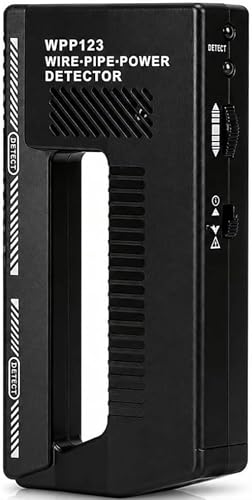
3. WPP123 Wire & Pipe Detector – Handheld Metal & Live AC Wire Scanner for Drywall with Sensitivity Control
The WPP123 Wire & Pipe Detector is a handheld scanning tool focused on identifying metal objects and live AC wiring behind drywall. It features adjustable sensitivity control, allowing the user to calibrate the device based on the material density of the wall. This unit is intended for users who need a straightforward tool to avoid hazards such as electrical lines or metal plumbing when performing home repairs. Rated 4.0 out of 5 stars, it offers a functional approach to wall scanning. By prioritizing metal and electrical detection, it helps users safely navigate walls without the unnecessary complexity of advanced imaging systems. It is a practical choice for those who need to quickly locate potential metal obstructions or energized circuits.
Best for: Basic metal and AC wire detection in walls.
Check on AmazonHighlights
- Handheld metal and wire scanner
- Adjustable sensitivity settings
- Optimized for drywall use
- Simple interface for quick detection
Keep in mind
- Lacks wood stud detection capabilities
- May require manual calibration for accuracy

4. Povlen Stud Finder Wall Scanner Detector with Wood Metal AC Wire Detection | 5 in 1 Beam Finder with LCD Display, Edge and Center Detection for Wood, Metal, Live AC Wire, Drywall, Framing, Pipe & Joists
The Povlen Stud Finder is a 5-in-1 wall scanner that provides a multifunctional solution for detecting wood, metal, and live AC wires. It features an LCD display that assists with edge and center detection, which is critical for accurate mounting on joists and framing. This device is designed for drywall applications and is rated 4.3 out of 5 stars. Its versatility makes it useful for a variety of tasks, from hanging heavy items to locating pipes and framing members. The inclusion of an LCD screen helps users visualize the location of studs and wires in real-time. It is a balanced tool for DIY enthusiasts who need a reliable, multi-purpose scanner that covers the most common structural elements found within residential walls.
Best for: General DIY wall scanning and stud finding.
Check on AmazonHighlights
- 5-in-1 detection capabilities
- LCD display for visual feedback
- Edge and center detection modes
- Identifies wood, metal, and AC wires
Keep in mind
- Performance may vary based on wall thickness
- Limited to drywall and interior wall surfaces

5. FNIRSI WD-01 6 in 1 Rechargeable Stud Finder Wall Scanner, Positioning Hole | for Wood Drywall Metal AC Wires Joist Pipe Stud Center Detecting, Audio Alarm, Digital Deep Scan Detector Inside the Wall
The FNIRSI WD-01 is a 6-in-1 rechargeable stud finder that incorporates a positioning hole for precise marking. This scanner is designed to detect wood, metal, pipes, and live AC wires behind drywall surfaces. With a 4.3 out of 5-star rating, it offers a deep scan feature that helps locate joists and studs even through thicker wall materials. The device includes an audio alarm to alert the user when a target is detected, which is helpful when working in low-visibility areas. Being rechargeable, it eliminates the need for constant battery replacements. This unit is well-suited for users who need a comprehensive scanning solution that provides both visual and audible feedback during home improvement and renovation projects.
Best for: Deep scanning and precise marking of wall studs.
Check on AmazonHighlights
- 6-in-1 scanning functionality
- Integrated positioning hole for marking
- Rechargeable battery design
- Deep scan mode for joists and pipes
Keep in mind
- Audible alarm may be sensitive to interference
- Charging time may affect workflow continuity
How to choose
Detection Versatility
When choosing a detector for electrical and plumbing tasks, verify the range of materials the device identifies. Options like the Povlen 5-in-1 and FNIRSI WD-01 offer multi-mode scanning for wood, metal, and live AC wires. If your work involves specific sub-surface infrastructure, the Walabot DIY 2 provides visual scanning for plastic pipes, metal pipes, and live or non-live wires behind drywall. Advanced underground requirements may necessitate specialized equipment like the RIDGID NaviTrack Scout, which is specifically engineered for locating underground pipe and cable lines, differing significantly from standard wall-based scanning tools found in DIY home improvement kits.
Visual Interface and Feedback
Digital scanners often incorporate LCD screens to provide clear data, such as the edge and center detection features on the Povlen and FNIRSI models. These visual aids help users pinpoint the exact location of joists or studs. Some devices, including the FNIRSI WD-01, supplement visual data with audio alarms to alert users when a stud, pipe, or wire is detected. Consider whether you prefer a graphical interface like the Walabot DIY 2, which visualizes what is behind the wall, or a traditional indicator display that provides alerts based on proximity to the hidden object.
Power Source and Portability
Power requirements vary across these tools, impacting both convenience and long-term operating costs. The FNIRSI WD-01 features a rechargeable battery, which eliminates the need for frequent battery replacements. Other handheld scanners typically rely on standard batteries for operation. Consider the frequency of your projects; a rechargeable unit is often more efficient for frequent, professional use, while battery-operated units may suffice for occasional maintenance. Always verify the device's compatibility with your specific environment, such as drywall versus underground applications, as power needs for deep-scan underground locators differ from lightweight interior wall scanners.
Depth and Sensitivity Control
Sensitivity is critical for distinguishing between studs, pipes, and electrical lines. The WPP123 Wire & Pipe Detector includes specific sensitivity control, allowing users to fine-tune the scanner's performance based on the density of the material being scanned. Deep scan capabilities are essential for identifying objects buried deeper within the wall structure. Tools like the FNIRSI WD-01 are designed with deep scan modes, while professional-grade equipment like the RIDGID NaviTrack Scout is built to handle the unique challenges of locating objects buried underground, rather than just behind standard interior drywall surfaces.
Application-Specific Design
Not all detectors are built for the same environment. Interior tools like the Walabot DIY 2, Povlen 5-in-1, and WPP123 are optimized for drywall and residential framing, focusing on studs, joists, and standard residential wiring. Conversely, the RIDGID NaviTrack Scout is a specialized underground locator designed for plumbing and cable infrastructure that exists outside the scope of typical wall scanners. When selecting a tool, match the device's design intent—whether for interior wall scanning or outdoor utility location—to your specific project requirements to ensure accurate detection results.
Frequently asked questions
Can these scanners detect pipes behind tiles?
While many of these tools are designed for drywall, performance can vary by surface material. The Walabot DIY 2 and other interior wall scanners are specifically marketed for drywall applications. If you are working with tile, ensure the scanner has sufficient depth and sensitivity, such as the FNIRSI WD-01 or WPP123, to penetrate through the added density of tile. Always consult the manufacturer's documentation for surface compatibility to prevent inaccurate readings when scanning through non-drywall materials.
What is the difference between stud finders and pipe locators?
Stud finders, such as the Povlen 5-in-1, are primarily designed to locate wooden joists and metal studs in residential walls. Pipe and cable locators, like the RIDGID NaviTrack Scout, are specialized tools built to track underground utilities. While some wall scanners like the Walabot DIY 2 and WPP123 can detect pipes, they are intended for interior wall scanning, whereas underground locators are engineered for deeper, more complex infrastructure tasks occurring outside the wall cavity.
Do I need a rechargeable or battery-operated detector?
The choice between rechargeable and battery-operated units depends on your usage frequency. The FNIRSI WD-01 offers a rechargeable power source, which is convenient for frequent users who want to avoid recurring battery costs. Battery-operated models are often simpler to use for intermittent projects where a quick scan is needed. If you work in remote locations, consider the availability of power for recharging versus the ease of carrying spare standard batteries for your detector.
How do I know if the scanner detects live wires?
Many modern wall scanners include dedicated modes for detecting AC electricity. Models like the Walabot DIY 2, Povlen 5-in-1, and WPP123 specifically list live wire detection as a core feature. These tools use sensors to identify the electromagnetic field emitted by live AC wires behind drywall. Always check the device specifications for 'Live AC' detection capabilities and follow the manufacturer's operating instructions to ensure the scanner is calibrated correctly for detecting electrical circuits safely.
Are these devices suitable for professional plumbing use?
Professional plumbing and electrical work often requires high-precision equipment. For interior wall scanning, tools like the Walabot DIY 2 offer advanced visual feedback. However, for significant underground work, the RIDGID NaviTrack Scout is the industry-standard choice, as it is specifically designed for locating underground pipes and cables. Standard residential stud finders may lack the depth and signal strength required for professional-grade utility location tasks outside of standard residential drywall and framing environments.
Bottom line
For users prioritizing comprehensive interior wall scanning, the Walabot DIY 2 stands out by providing visual detection of wood, metal, plastic pipes, and both live and non-live wires behind drywall. It offers a more detailed interface than standard beep-based scanners. For those needing a balance of features and ease of use, the FNIRSI WD-01 and Povlen 5-in-1 are reliable choices, offering rechargeable utility and multi-mode scanning for joists and studs. If your work moves beyond walls into professional underground utility tracking, the RIDGID NaviTrack Scout is the superior, specialized tool. It provides the specific high-performance locating capabilities required for underground pipe and cable infrastructure, far exceeding the functional limits of typical interior wall scanners.
Deciding which tool to purchase requires matching the device to your project environment. If your work is confined to residential drywall, choose a versatile 5-in-1 or 6-in-1 scanner like the FNIRSI or Povlen to handle studs, wires, and pipes simultaneously. If you require deep visual analysis of what is behind your walls, the Walabot DIY 2 is the most robust option. However, if your professional requirements involve locating plumbing or cables buried underground, avoid interior wall scanners entirely and invest in a specialized device like the RIDGID NaviTrack Scout, which is engineered specifically for those demanding, non-drywall applications.
More from Electrical & Plumbing Tools
Top-Rated Stud, Wire, and Pipe Finders for Precise Wall Scanning
Compare top-rated wall scanners for detecting wood, metal, pipes, and live wires. Find the right stud finder for your next electrical or plumbing project.
Read comparison →
Top-Rated Stud, Wire, and Pipe Finders for Precise Wall Scanning
Compare top-rated stud, wire, and pipe scanners. Find the right tool for detecting wood, metal, live AC wires, and plumbing behind drywall for your next project
Read comparison →
Top-Rated Voltage and Stud Finders for Electrical and Workshop Projects
Compare professional-grade voltage finders and stud sensors from Zircon, Klein Tools, and KAIWEETS to safely locate circuits and studs in your home or workspace
Read comparison →