Top 100mm Diamond and Carbide Hole Saws for Porcelain and Metal
Selecting the correct 100mm hole saw depends entirely on the material density and the specific requirements of your project. For brittle, hard surfaces like porcelain, ceramic, granite, and glass, diamond-tipped hole saws are the standard choice due to their ability to grind through dense minerals without shattering the material. These tools typically feature pilot bits to ensure accuracy and prevent walking during initial contact. Conversely, heavy-duty carbide-tipped cutters are engineered for industrial metal applications, including stainless steel, copper, and aluminum. Understanding whether your task requires a precision diamond-grit edge or an aggressive carbide tooth design is critical for achieving a clean hole while preserving the longevity of your drill and the integrity of your workpiece.
When evaluating these cutting tools, consider the shank design and intended cooling methods. Many diamond-grit models are rated for both wet and dry applications, though maintaining consistent lubrication is often recommended for longevity. For metal-cutting tasks, the focus shifts toward structural durability and heat resistance, as these saws must maintain their edge against abrasive metallic shavings. This comparison outlines the primary features of current 100mm options, highlighting specific design elements like triangle shanks for improved grip or serrated edges for faster material removal. By matching the tool's specific composition to your material, you can ensure more consistent results for plumbing, electrical, or decorative masonry installations.

1. 4 inch Diamond Hole-Saw Bits with Pilot Drill Bit -4" Diamond Tipped Tile Hole Saws with Guiding Bit Accurate Drilling for Porcelain Tile Ceramic Pottery Granite Stone Glass Bottles 102mm.
This 4-inch (102mm) diamond-tipped hole saw is designed for precision drilling in hard materials. It includes a pilot drill bit to assist with centering, which is essential when starting holes in slick surfaces like porcelain tile, ceramic, granite, or glass. The diamond-grit construction allows it to abrade through stone and pottery without the need for traditional cutting teeth, which can often cause cracking in brittle tiles. Its larger diameter of 102mm makes it a versatile choice for larger plumbing or decorative openings. The inclusion of a pilot bit provides a stable starting point, reducing the likelihood of the tool wandering across the workpiece during the initial engagement phase.
Best for: Larger diameter holes in ceramic and stone tile.
Check on AmazonHighlights
- Includes integrated pilot drill bit
- Designed for hard tile and glass
- Diamond-tipped abrasive surface
- 102mm diameter for wider openings
Keep in mind
- May require careful speed control
- Slightly larger than standard 100mm
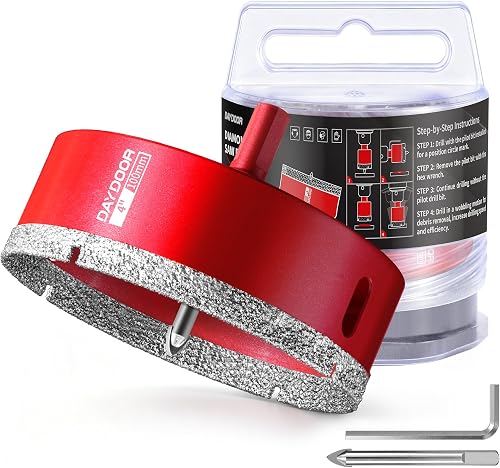
2. DAYDOOR 4" Diamond Hole Saw Bit with Pilot Drill Bit(3/8" Triangle Shank) | 1pc 100mm Diamond Tile Hole Saw with Guiding Bit for Porcelain Tile Ceramic Pottery Granite Stone Glass Bottles
The DAYDOOR 100mm diamond hole saw features a 3/8-inch triangle shank, a design choice intended to provide a more secure grip in standard drill chucks, reducing the risk of slippage under torque. This tool is optimized for use on porcelain, ceramic, pottery, granite, and glass bottles. By incorporating a pilot bit, it allows for more accurate placement, which is vital when working on finished surfaces where aesthetic precision is a priority. The diamond-grit edge is intended to handle the abrasive nature of tile and stone, providing a consistent cut without the aggressive vibration often associated with standard metal-cutting hole saws.
Best for: Users needing a secure, non-slip drill connection.
Check on AmazonHighlights
- Standard 100mm cutting diameter
- 3/8-inch triangle shank design
- Includes a pilot drill bit
- Effective on granite and ceramic
Keep in mind
- Limited to non-metal materials
- May lack specific cooling guidance

3. 4" Diamond Hole Saw Bits with Pilot Drill Bit-1pcs 100mm Diamond Tipped Tile Hole Saw with Guiding Bit for Porcelain Tile Ceramic Pottery Granite Stone Glass Bottles(3/8" Triangle Shank)
Boasting a 4.9-star rating, this 100mm diamond-tipped hole saw is built for tasks involving porcelain, ceramic, granite, and glass. The tool utilizes a 3/8-inch triangle shank, which helps stabilize the bit during operation. The inclusion of a pilot bit assists in maintaining the hole's position, ensuring that the diamond grit engages the material precisely where intended. Its construction is focused on the specific needs of masonry and tile installers who require a reliable tool for decorative or utility-based drilling in hard, non-metallic surfaces. The diamond-grit coating is engineered to withstand the resistance of stone and tile, providing a cleaner edge than traditional steel cutters.
Best for: High-accuracy tile and stone drilling.
Check on AmazonHighlights
- High user satisfaction rating
- Stable 3/8-inch triangle shank
- Includes dedicated pilot bit
- Optimized for brittle materials
Keep in mind
- Not suitable for steel or iron
- Requires steady, controlled pressure

4. Mollom 3-15/16" (100mm) Heavy Duty Carbide Hole Saw with 2 Pilot Bits | Industrial-grade Hole Cutters for cutting Stainless Steel,Mild Steel, Iron,Copper,Brass,Aluminum,Plastic
Unlike the diamond-grit options, this Mollom 100mm hole saw is an industrial-grade carbide-tipped tool designed specifically for metals. It is capable of cutting through stainless steel, mild steel, iron, copper, brass, aluminum, and plastic. The heavy-duty carbide teeth are engineered to withstand the high heat and friction generated when cutting through rigid metallic alloys. This kit includes two pilot bits, which are essential for maintaining alignment when drilling into potentially slick metal surfaces. Because of its carbide composition, this tool is not intended for use on tile or stone, as the teeth are designed to shear metal rather than abrade mineral surfaces.
Best for: Industrial metal and alloy fabrication.
Check on AmazonHighlights
- Industrial-grade carbide construction
- Includes two replacement pilot bits
- Capable of cutting stainless steel
- Versatile across multiple metal types
Keep in mind
- Not intended for porcelain or tile
- Requires lubrication for metal cutting

5. 4 Inch Diamond Hole Saw with Pilot Drill Bit 1PCS | Premium Tile Hole Saws Porcelain, Ceramic, Granite, Marble, Glass , 1-3/8" Cutting Depth, Serrated Edge Wet/Dry Use (100mm)
This 100mm diamond hole saw features a serrated edge design, which distinguishes it from standard solid-grit diamond bits. It is rated for both wet and dry use, offering flexibility for various job site conditions. With a cutting depth of 1-3/8 inches, it is suitable for thicker slabs of porcelain, marble, or granite. The serrated edge is intended to facilitate faster material removal while reducing heat buildup, which is a common challenge when drilling dense stone. Including a pilot bit ensures that the initial cut is accurate, preventing the tool from skating across the polished surface of the tile or glass.
Best for: Thicker porcelain and marble slabs.
Check on AmazonHighlights
- 1-3/8 inch cutting depth
- Serrated edge for faster cutting
- Suitable for wet or dry operation
- Includes pilot drill bit
Keep in mind
- Serrated edge may be less smooth
- Requires careful alignment
How to choose
Material Compatibility
When selecting a 100mm hole cutter, first identify your target material. Diamond-tipped bits are specialized for brittle, hard surfaces including porcelain tile, ceramic, granite, marble, stone, and glass bottles. Conversely, carbide-tipped hole saws are engineered for metallic and synthetic materials, such as stainless steel, mild steel, iron, copper, brass, aluminum, and plastic. Choosing the incorrect cutter type can lead to poor results or tool failure. Always confirm that the bit’s abrasive or cutting edge is specifically rated for your project surface to ensure efficient material removal and to maintain the integrity of the hole saw's cutting teeth or diamond grit during operation.
Pilot Bit Utility
Most 100mm porcelain hole cutters include a pilot drill bit. This component is essential for maintaining accuracy during the initial engagement with the surface, preventing the hole saw from wandering or skating across smooth tiles. When reviewing options, confirm the inclusion of a pilot bit, as some industrial-grade models may offer multiple replacements. The pilot drill provides a centered starting point, which is critical when working with hard, slippery materials like glass or polished porcelain. Ensure the pilot bit is properly seated before starting the tool to maintain precision throughout the cutting process and to minimize the risk of surface chipping or accidental damage.
Shank Compatibility
The shank design determines how the hole saw connects to your power drill. Many 100mm diamond tile hole saws feature a 3/8-inch triangle shank, which is designed to provide a secure, non-slip grip in standard drill chucks. Before purchasing, verify the chuck capacity of your drill to ensure it accommodates the shank size. A triangle shank configuration helps prevent the bit from spinning inside the chuck under heavy torque or resistance. If you are using a specialized drill press or a specific handheld drill, confirm that the shank geometry is compatible with your equipment's collet or chuck mechanism to avoid vibration or misalignment during use.
Cutting Depth Specifications
Consider the thickness of the material you intend to drill. While many 100mm hole cutters are designed for standard tile applications, some models specify a precise cutting depth, such as the 1-3/8 inch limit found on specific diamond hole saws. Matching the cutting depth to your material thickness is vital for preventing the tool from binding or overheating. If your project involves thicker slabs of granite or stone, ensure the hole saw provides enough clearance to penetrate the entire depth without the drill chuck hitting the surface. Always check the product specifications for depth limitations to ensure the tool is suitable for your specific installation requirements.
Wet vs. Dry Operation
Diamond-tipped hole saws are often versatile enough for both wet and dry applications, though using water for cooling is standard practice for maintaining diamond grit longevity. Serrated edge designs are frequently marketed for dual-use, allowing for flexibility depending on the project environment. When drilling porcelain or glass, heat buildup can cause premature wear or material cracking. If your project allows, employing a wet-drilling technique often yields cleaner results and extends the life of the cutting edge. Review the product details to confirm if the manufacturer recommends a specific cooling method to maximize the performance and durability of your chosen 100mm hole cutter.
Frequently asked questions
Can I use a diamond-tipped hole saw on stainless steel?
No, diamond-tipped hole saws are designed specifically for masonry and mineral-based materials like porcelain, ceramic, granite, and glass. For stainless steel, mild steel, iron, or other metals, you should select a heavy-duty carbide hole saw. Using a diamond-tipped bit on metal will not produce the desired results and may damage the diamond coating, whereas carbide-grade cutters are engineered with the necessary geometry to effectively cut through industrial metals and plastics without failing.
What is the purpose of the 3/8-inch triangle shank?
The 3/8-inch triangle shank is a design feature intended to improve the connection between the drill chuck and the hole saw bit. The three flat sides of the triangle provide a more secure, positive grip compared to a standard round shank, which can slip under high torque. This stability is particularly important when drilling into hard, dense materials like porcelain or stone, as it helps maintain control and prevents the tool from spinning in the chuck during the cutting process.
Does a 100mm hole saw come with a pilot bit?
Most of the 100mm hole cutters listed for tile and stone applications include a pilot drill bit. This component is crucial for centering the hole saw on the material surface and preventing the bit from wandering. Some industrial models, such as those intended for metal, may include multiple pilot bits to ensure you have a replacement available. Always check the specific product description to confirm the inclusion of the pilot bit and the quantity provided in the package.
How do I prevent chipping when drilling porcelain tile?
To minimize chipping when drilling porcelain, use a hole saw equipped with a pilot bit to ensure a stable start. Maintaining a consistent, moderate speed and applying steady, even pressure is key. If the bit is rated for wet use, applying water while drilling helps cool the tool, reduce friction, and clear away debris, which significantly lowers the risk of cracking or chipping the tile surface. Avoid forcing the tool, as this can cause the material to splinter or shatter.
Are these 100mm cutters suitable for glass bottles?
Yes, several diamond-tipped hole saws listed are specifically noted for use on glass bottles. When drilling glass, it is essential to use a slow, steady drilling speed and ensure the bit is properly cooled, preferably with water. Because glass is fragile, the centering action provided by the pilot drill bit is especially important to prevent the tool from sliding across the smooth surface upon contact. Always wear appropriate safety gear when working with glass to protect against sharp shards and dust.
Bottom line
For users prioritizing the highest level of consumer satisfaction, the 4-inch Diamond Hole Saw Bit (ASIN: B0GLM384L5) stands out with a 4.9-star rating. This model features a 3/8-inch triangle shank, making it a reliable choice for those using standard handheld drills on porcelain, ceramic, or granite. It provides the necessary stability for accurate cuts in brittle materials. Alternatively, if your project requires metalworking, the Mollom 100mm Heavy Duty Carbide Hole Saw (ASIN: B0B3XL676C) is the dedicated solution for stainless steel and iron. While its rating is slightly lower at 4.2 stars, it is the only option in this group specifically engineered to handle industrial-grade metals rather than stone or tile, making it the clear winner for mechanical applications.
Deciding between these options depends entirely on the material you need to cut. If you are working with stone, tile, or glass, choose one of the diamond-tipped models; the 4.9-rated B0GLM384L5 is a top-tier choice for consistent performance. If you are drilling through metal or plastic, bypass the diamond bits entirely and select the Mollom carbide hole saw (B0B3XL676C). Always verify your drill's chuck capacity against the 3/8-inch shank requirement for the diamond bits to ensure a proper fit before finalizing your purchase. Matching the tool's cutting edge technology to the hardness and composition of your specific workpiece is the most effective way to ensure project success.
More from Saws & Cutting Tools
Top 100mm Diamond Tile Hole Saws: Precision Cutting for Hard Surfaces
Compare the best 100mm diamond hole saws for porcelain, granite, and glass. Find the right drill bit for your tiling project with these expert-curated options.
Read comparison →
Top 110V Tile Cutters and Masonry Saws for Professional and DIY Projects
Compare 110V tile cutters and masonry tools. From handheld wet saws to manual cutters, find the right equipment for ceramic, porcelain, and concrete projects.
Read comparison →
Top 115mm Diamond Porcelain Tile Cutting Discs for Angle Grinders
Explore the best 115mm diamond cutting discs for porcelain tile. Compare features for clean, chip-free cuts on ceramic, marble, and granite projects.
Read comparison →