Top Porcelain and Bullnose Tile Cutting Tools for Professional Results
Selecting the right equipment for porcelain and ceramic tile projects depends heavily on the specific cut required. While straight runs across large-format tiles demand the stability of a manual rail cutter, complex shapes and decorative edge profiles require specialized bits and handheld tools. Porcelain is notably harder than standard ceramic, necessitating diamond-tipped accessories or professional-grade tungsten wheels to achieve clean results without fracturing the material. From heavy-duty manual cutters designed for 48-inch spans to diamond-profile wheels for creating bullnose finishes on countertops, the following tools represent various solutions for installers. Understanding the distinction between scoring-and-snapping tools and abrasive shaping bits is essential for completing both layout cuts and the final edge detailing on your installation.
Achieving professional-grade results on tile edges often involves a multi-step process. While a standard manual cutter is the workhorse for floor and wall layouts, it cannot shape the rounded edge required for a bullnose finish. For that specific task, specialized diamond profile wheels are used with grinders to smooth and shape the material. If you are handling mosaic work or irregular corners, handheld nippers or versatile grinding kits provide the necessary maneuverability. This guide evaluates tools based on their specific utility, ranging from large-capacity manual systems to precision shaping bits, helping you determine which equipment aligns with your project requirements and the specific material hardness of your tile selection.

1. Ceramic Tile Cutter – Kit - Cut Curves, Notches, Corners and Plunge Cut Square Outlets with 4 1/2” Diamond Blade For Grinder, Round Wire Carbide Hacksaw Blade Cuts Any Direction In Ceramic Wall Tiles
This kit is designed for intricate work where standard straight-line cutters fail. It features a 4 1/2-inch diamond blade intended for use with a grinder, allowing for plunge cuts, square outlet cutouts, and corner notches. Additionally, the inclusion of a round wire carbide hacksaw blade provides the flexibility to cut in any direction, which is particularly useful for irregular shapes in ceramic wall tiles. This toolset is focused on versatility rather than high-volume straight cuts, making it a functional addition for installers who frequently encounter obstacles like electrical boxes or unique architectural curves that require custom fitting. Its design prioritizes maneuverability, allowing users to navigate around fixed points that would otherwise be impossible to reach with a traditional rail-mounted tile cutter.
Best for: Cutting complex shapes, notches, and outlets in ceramic wall tiles.
Check on AmazonHighlights
- Includes a 4 1/2-inch diamond blade for grinders
- Round wire carbide hacksaw blade for multidirectional cutting
- Capable of executing plunge cuts and corner notches
- Specialized for ceramic wall tile applications
Keep in mind
- Limited to smaller scale or detail-oriented tasks
- Requires a compatible grinder for the diamond blade

2. BestEquip Manual Tile Cutter 48 Inch, Laser Guide & Tungsten Wheel for Precision, Cuts Porcelain & Tile, All-Steel Durable Frame, Large 48-Inch Capacity for professional installers or beginners
Designed for large-format porcelain and tile, this manual cutter offers a 48-inch capacity, making it suitable for professional installers or beginners working on expansive flooring layouts. The unit features an all-steel frame for durability and incorporates a laser guide to assist with alignment accuracy. It utilizes a tungsten wheel to score and snap tiles, a method preferred for maintaining clean edges on porcelain without the dust associated with power saws. The large capacity accommodates long, straight cuts across standard and oversized tiles, providing a stable platform for high-precision work. By minimizing the need for power tools on straight runs, this manual system serves as a foundational piece of equipment for large-scale tiling projects requiring consistent, repeatable results.
Best for: Large-format straight cuts on porcelain and ceramic tiles.
Check on AmazonHighlights
- 48-inch cutting capacity for large tiles
- Integrated laser guide for precision alignment
- Durable all-steel frame construction
- Tungsten wheel scoring for clean porcelain edges
Keep in mind
- Large footprint may be cumbersome for small workspaces
- Limited to straight-line cuts only
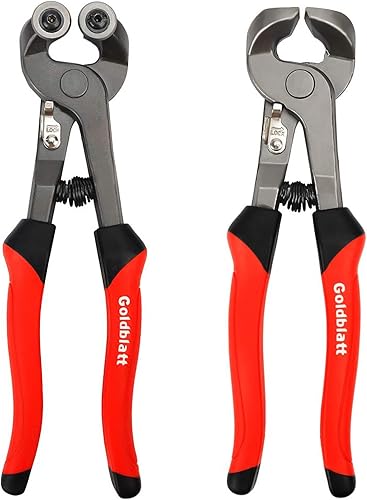
3. Goldblatt 2 Pieces Glass Tile Nippers Set, Ceramic & Mosaic Cutter Tools | Heavy Duty Carbon Steel, Tile Cutter, Soft Grip Handles, Porcelain Nippers, Wheeled Glass Cutter, Precision Trimming
This two-piece set is engineered for fine-tuning and precision trimming of glass, ceramic, and porcelain tiles. The tools feature heavy-duty carbon steel construction intended for durability during repetitive use. The inclusion of soft-grip handles is designed to improve user comfort during manual labor, which is helpful when working on detailed mosaic patterns or trimming small tile sections to fit tight gaps. As a manual nipping tool, it provides direct control over material removal, allowing for precise shaping that larger cutters cannot replicate. These nippers are a practical choice for mosaic artists or installers who need to make minor adjustments to tile edges after the primary cuts have been made, ensuring a tight fit against walls or fixtures.
Best for: Precision trimming and mosaic tile shaping.
Check on AmazonHighlights
- Heavy-duty carbon steel construction
- Soft-grip handles for improved comfort
- Includes two distinct tool types for versatile trimming
- Designed for precision porcelain and glass work
Keep in mind
- Requires significant manual effort for large amounts of material
- Not suitable for long, straight-line cuts
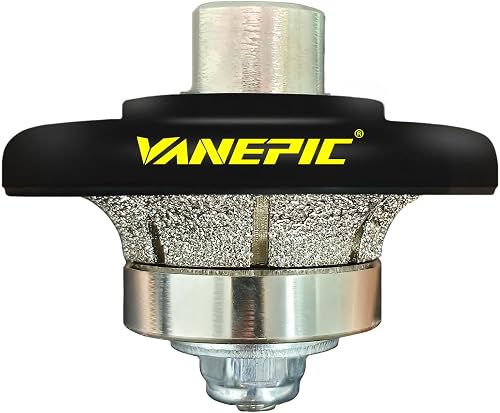
4. 3/8 inch B10 Diamond Demi bullnose Half Bullnose Profile Wheel Diamond Hand Profiler Router Bit with 5/8-11 Thread for Grinder Polisher Granite Marble Concrete and Countertop Edge Shaping
This 3/8-inch diamond demi bullnose bit is specifically engineered for edge shaping on granite, marble, concrete, and porcelain countertops. Designed to be used with a standard grinder or polisher, it features a 5/8-11 threaded connection, making it compatible with most professional-grade power tools. The profile wheel creates a smooth, rounded half-bullnose edge, which is essential for professional finishing on countertop edges or exposed tile transitions. Because it is a diamond-based tool, it is capable of handling the high density of porcelain and stone, providing a consistent edge profile. This tool is a specialized implement for finishers who need to move beyond straight cuts to provide a refined, architectural edge on hard surface materials.
Best for: Creating professional bullnose edge profiles on hard surfaces.
Check on AmazonHighlights
- 3/8-inch diamond profile for half-bullnose edges
- Compatible with standard 5/8-11 thread grinders
- Designed for hard materials like porcelain and marble
- High-quality diamond abrasive for shaping
Keep in mind
- Requires a grinder for power and operation
- Specific to edge shaping, not general tile cutting

5. QEP 10630 24 in. Professional Tile Cutter Yellow
The QEP 10630 is a professional-grade manual tile cutter with a 24-inch capacity, catering to installers who require a reliable tool for standard-sized tiles. Its design focuses on the scoring-and-snapping method, which is effective for maintaining clean edges on porcelain and ceramic. The tool is built for durability and ease of use, making it a standard choice for contractors or DIYers who need to perform repetitive straight cuts on walls or floors. By providing a stable rail and a sharp scoring wheel, it minimizes the risk of chipping or uneven breaks. Its 24-inch length is ideal for most residential tile sizes, offering a balance between portability and sufficient reach for common tile formats found in bathrooms and kitchens.
Best for: Standard 24-inch straight cuts for residential tile projects.
Check on AmazonHighlights
- 24-inch cutting capacity for common tile sizes
- Professional-grade construction for durability
- Effective scoring-and-snapping mechanism
- Designed for clean cuts on porcelain and ceramic
Keep in mind
- Limited to tiles under 24 inches in length
- Lacks the specialized features for edge profiling or curves
How to choose
Edge Profiling vs. Cutting
When searching for a porcelain bullnose tool, distinguish between cutting the tile to size and shaping the rounded edge. While manual tile cutters like the BestEquip 48 Inch or QEP 10630 handle straight cuts across large formats, they do not create a bullnose profile. For shaping a rounded edge on porcelain or stone, a diamond profiler bit, such as the B10 Diamond Demi bullnose tool, is required. This specific bit attaches to a grinder to shape and polish the edge, whereas cutters are designed for linear separation. Ensure your project scope determines whether you need a tool for sizing tiles or for finishing exposed edges.
Manual vs. Power Tool Requirements
Manual tile cutters offer high precision for straight, clean breaks on porcelain without the dust associated with power tools. The BestEquip 48-inch model and QEP 24-inch cutter are ideal for standard layouts. Conversely, power tools like the diamond blade kit for grinders provide versatility for plunge cuts, notches, and curves that manual tools cannot achieve. If your bullnose application requires intricate cutouts around outlets or specific corner shapes, a grinder-based system with appropriate diamond blades is superior to a rail-based manual cutter.
Material Compatibility
Not all cutting tools are built for the density of porcelain. While some nippers or hacksaw blades work for ceramic wall tiles, porcelain requires industrial-grade diamond abrasives or hardened tungsten wheels. The Goldblatt Glass Tile Nippers are designed for precision trimming on glass and ceramic, but they may lack the durability needed for heavy-duty porcelain bullnose work. Always verify that your chosen blade or router bit is rated for the hardness of porcelain to ensure a clean finish and avoid premature tool degradation during the shaping process.
Capacity and Size Constraints
Consider the dimensions of your tile when choosing a cutter. Large-format porcelain tiles require a cutter with sufficient capacity, such as the BestEquip 48-inch manual tile cutter, to maintain accuracy over long distances. For smaller projects or standard 24-inch tiles, the QEP 10630 provides a more compact solution. When selecting a diamond profiler bit for bullnosing, ensure the thread size, such as the 5/8-11 thread on the B10 Diamond Demi bit, matches your existing grinder or polisher equipment to guarantee a secure fit during operation.
Ergonomics and Precision
Precision is critical when working with expensive porcelain. Features like laser guides on manual cutters assist in aligning cuts, while soft-grip handles on tools like the Goldblatt Nippers help reduce fatigue during detailed trimming work. When using power tools for bullnosing, the stability of the grinder and the profile of the diamond bit directly impact the smoothness of the finished edge. Prioritize tools that offer a balance of durable construction and ergonomic features to maintain control and accuracy throughout the duration of your tiling installation or edge finishing project.
Frequently asked questions
Can I use a standard tile cutter to create a bullnose edge?
No, a standard manual tile cutter, such as the QEP 10630 or the BestEquip 48-inch model, is designed exclusively for scoring and snapping tiles in a straight line. These tools lack the profile-shaping capability required to create a rounded bullnose edge. To achieve a bullnose profile, you must use a specialized diamond router bit, such as the B10 Diamond Demi bullnose tool, in conjunction with a compatible angle grinder or polisher.
What tool is best for cutting curves in porcelain tile?
For cutting curves, notches, and corners in porcelain, a manual tile cutter is insufficient. You should use a grinder-based system equipped with a diamond blade specifically designed for these complex tasks. The Ceramic Tile Cutter kit listed is engineered for these types of plunge cuts and curves. Always ensure your grinder is compatible with the bit or blade specifications before starting your project to ensure safety and precision during the intricate cutting process.
Are tile nippers suitable for finishing porcelain bullnose edges?
Tile nippers like the Goldblatt 2-piece set are excellent for precision trimming, mosaic work, and small adjustments to ceramic or glass tiles. However, they are not intended for creating a smooth, rounded bullnose profile. Using nippers on porcelain can result in jagged edges or chips due to the hardness of the material. For a professional bullnose finish, a diamond profile bit is the correct tool to shape and smooth the edge uniformly.
Does the B10 Diamond Demi bullnose bit fit all grinders?
The B10 Diamond Demi bullnose bit features a 5/8-11 thread, which is a standard connection for many angle grinders and polishers. Before purchasing, verify that your specific grinder or polisher tool accepts the 5/8-11 thread pattern. Using an incompatible tool may result in a loose connection, which can be hazardous and prevent you from achieving a consistent, smooth profile on your porcelain or granite countertop edges.
What is the primary difference between the QEP 10630 and the BestEquip 48-inch cutter?
The primary difference is the maximum cutting capacity. The QEP 10630 is designed for tiles up to 24 inches in length, making it suitable for standard-sized projects. The BestEquip manual tile cutter offers a larger 48-inch capacity, which is essential for professional installers working with large-format porcelain tiles. Both tools are manual, meaning they rely on a tungsten wheel to score and snap the tile, rather than using power to grind through the material.
Bottom line
For the best results in porcelain bullnose projects, you need to combine the right cutting tool with a dedicated shaping tool. The B10 Diamond Demi bullnose bit is the strongest fit for edge shaping, as it provides the necessary diamond abrasive surface to create a rounded profile on hard materials like porcelain and granite. If your project also requires cutting tiles to size, the BestEquip 48-inch manual tile cutter is the superior choice for large-format porcelain due to its increased capacity and precision. While the Ceramic Tile Cutter kit is excellent for complex curves and notches, it does not replace the specialized diamond profiler bit required to achieve a clean, smooth bullnose finish on exposed tile edges.
Deciding between these tools depends on whether your project focuses on installation layout or edge finishing. If you are laying tile and need to resize pieces, prioritize the manual cutters like the QEP 10630 or BestEquip 48-inch unit based on your tile dimensions. If you are specifically addressing exposed edges, invest in a diamond profiler bit compatible with your grinder. Do not attempt to use nippers or manual cutting blades for bullnosing, as they cannot produce the required profile. Always match your tool selection to the specific task—cutting for size versus shaping for aesthetics—to ensure the highest quality outcome for your porcelain tiling project.
More from Saws & Cutting Tools

Top Porcelain Disc Cutters for Angle Grinders: A Comprehensive Review
Compare top-rated 4-inch and 4.5-inch diamond saw blades for porcelain, ceramic, and stone. Find the right cutting disc for your tiling project needs today.
Read comparison →
Top Porcelain Slab Cutters and Tile Cutting Tools for Professional Projects
Explore our guide to porcelain slab cutters, diamond blades, and manual tile tools. Find the right equipment for your next ceramic or stone installation project
Read comparison →
Top Portable Circular Saw Tables and Jobsite Cutting Stations for Workshops
Explore the best portable saw stations and jobsite table saws. We compare features of top-rated cutting equipment to help you find the right fit for your shop.
Read comparison →